Hue Shift Physics Puzzle
Reviews
Hue Shift Physics Puzzle stands out by pairing a simple color-matching rule with a robust physics engine. The ball’s realistic movement forces players to consider speed and angle, not just hue. Level layouts grow cleverly, introducing obstacles that require both observation and timing. The built-in editor extends the experience, letting players craft their own challenges. Clean visuals keep the focus on the puzzles, making this a solid choice for anyone who enjoys thoughtful, non-violent games.
Description
Core Concept and Mechanics
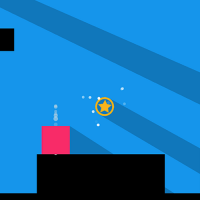
Hue Shift Physics Puzzle centers on a straightforward idea: players control a ball that must gather all stars scattered across a level. Each star displays a specific color, and the ball needs to be set to that same hue before making contact. This requirement turns simple navigation into a test of timing and observation. The controls are responsive, letting players switch colors with a tap or click while guiding the ball along a path. The physics simulation governs every movement, so the ball rolls, bounces, and slows down in ways that feel grounded. Success depends on reading the environment and deciding when to change color versus when to adjust direction.
Level Layout and Obstacle Design
Each stage presents a fresh arrangement of barriers, gaps, and star placements. Early levels introduce basic layouts where color changes happen at a relaxed pace, giving newcomers time to understand the connection between hue and collection. Later stages add tighter spaces, moving obstacles, and sequences that require rapid color shifts. The variety keeps the experience from feeling repetitive, as players must adapt their approach to each new configuration. Obstacles might block direct routes or force the ball to bounce at specific angles, adding a spatial reasoning element to the puzzle solving.
Physics and Realistic Movement
The physics engine is a defining feature of Hue Shift Physics Puzzle. Every roll, bounce, and collision follows realistic rules, meaning the ball’s speed and trajectory matter. A fast approach might overshoot a star, while a gentle roll could allow for precise alignment. Players learn to account for momentum, friction, and surface angles when plotting their course. This layer of realism distinguishes the game from simpler color-matching puzzles, as it demands both mental planning and an understanding of how objects behave in a simulated environment.
Creative Tools and Replay Value
Beyond the main set of stages, Hue Shift Physics Puzzle includes a built-in editor that lets players design their own puzzles. This tool allows users to place stars, choose colors, and arrange obstacles to create custom challenges. Sharing these creations extends the game’s lifespan, as the community can trade and attempt each other’s levels. The editor is intuitive enough for casual users to experiment with, yet offers enough flexibility to craft complex scenarios. This feature encourages ongoing engagement beyond the initial playthrough.
Visual Style and Family Appeal
The game adopts a clean, uncluttered visual approach. Bright colors distinguish each star and the ball, making the core mechanic easy to follow at a glance. Backgrounds remain simple, ensuring that the focus stays on the puzzle elements. There are no violent or mature themes, and the overall tone is light and encouraging. This design makes the game suitable for players of various ages, from children learning color recognition to adults seeking a calm but challenging mental exercise. The lack of distracting elements helps maintain concentration during play.
Progression and Difficulty Curve
Difficulty increases gradually across the levels. Early stages build familiarity with color matching and basic physics, while later ones introduce sequences that test both reflexes and strategic foresight. Some levels hide additional stars or secret routes, rewarding careful exploration. The progression feels natural, with each new challenge building on skills learned earlier. Players who struggle can revisit earlier stages to practice, and the editor provides a way to create tailored exercises for specific mechanics. This structure keeps the game accessible without becoming too easy for experienced puzzle fans.