Pathfinder Avoidance: Strategic Motion Game

Reviews
Pathfinder Avoidance succeeds by adding a layer of strategy to the classic evade genre. The ability to manipulate patrol objects into walls creates satisfying moments of clever problem-solving. The difficulty curve is well-paced, introducing new elements gradually. The minimalistic design keeps the focus on gameplay, and the lack of violence makes it suitable for all ages. While the core loop is simple, the variety of level layouts ensures lasting appeal. It is a polished, thoughtful game that respects the player's intelligence.
Description
Core Movement Mechanics
Players control a small character using simple mouse clicks to navigate through spaces patrolled by radar-emitting objects. These objects follow set paths but react to proximity by increasing speed. The challenge lies in reading their movement patterns and finding gaps to slip through. Unlike typical avoidance games, here the patrols can be manipulated. By luring them into collisions with walls or each other, players can alter the environment, creating new safe passages or removing obstacles. This adds a layer of strategy beyond simple dodging, rewarding those who think ahead.
Level Design & Variety
Each stage presents a unique arrangement of radar sources and barriers. Early levels introduce basic straight-line patrols, while later stages incorporate intersecting paths, moving walls, and multiple radar types. The difficulty ramps up gradually, ensuring players can learn the fundamentals before facing more complex patterns. Some levels require precise timing to cross open areas, while others demand patience as players wait for an opening. The variety keeps the experience fresh, with no two stages feeling identical. The minimalistic visual style ensures the focus stays on the gameplay, with clear visual cues for radar zones and object trajectories.
Strategic Depth & Problem Solving
The game shines when players realize they can use the patrols' momentum to their advantage. Instead of simply avoiding detection, a clever player can bait a fast-moving radar source into smashing through a barrier, opening a shortcut. This transforms each level into a small puzzle: how to use the environment and enemy behavior to clear a path. Success requires observation, planning, and a willingness to experiment. The game does not penalize failure heavily, encouraging trial and error. This makes it accessible to younger players while still offering depth for adults seeking a mental workout.
Visual & Audio Presentation
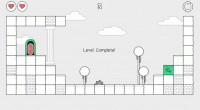
The graphics are intentionally clean and uncluttered, with a flat design that uses color to convey information. Radar zones appear as translucent circles, and patrol objects are distinct shapes. The audio is subtle, with soft tones indicating proximity to a radar zone and a gentle chime upon level completion. This restrained approach helps maintain focus and reduces sensory overload, making it suitable for extended play sessions. The interface is minimal, with only essential controls visible, allowing players to immerse themselves in the task at hand.
Progression & Replay Value
As players advance, new elements are introduced gradually, such as moving obstacles and temporary safe zones. The game tracks completion times and encourages players to improve their performance. While there is no explicit scoring system, the satisfaction of mastering a difficult level provides its own reward. The game offers a large number of stages, each with a distinct layout, ensuring many hours of content. For those who enjoy optimization, replaying earlier levels to find faster routes adds additional challenge. The game respects the player's time, with short level lengths that fit well into quick gaming sessions.